
Searching St. Louis County Criminal Dockets
Missouri Case.net is where most people begin. It indexes St. Louis County circuit cases and many municipal ones. A case number works best as a search key. Without one, search by litigant name or filing date. Then verify the style, court location, division, and category before trusting a match. Pick the wrong place and you'll go astray: the independent City of St. Louis is a separate court, despite sharing the county name.
Case.net is an index and docket-entry route. It does not promise remote access to every filing. When a record matters, write down the case number, entry date, and document title. Those details let the Circuit Clerk pull the right file if the public view is limited.
- Open Case.net and use Case Number Search when the number is available.
- Otherwise search by litigant name or filing date and narrow to St. Louis County.
- Open the case number and confirm the style, category, location, and assigned division.
- Review Docket Entries for the event date, wording, hearing setting, and any public document link.
- Ask the Circuit Clerk for public-terminal instructions or a copy when the entry does not supply the needed record.
St. Louis County Criminal Docket Routes in Case.net
The Track This Case guide lays out separate search paths: litigant name, filing date, case number, and scheduled hearings and trials. The hearings search answers a quick question about an upcoming setting. It is no substitute for the full case header and docket history. Track This Case alerts are not official court notices. The current notice and division instructions control.
Pick a matching case number. Save the Case Header details first. The official File Viewer Help explains an important difference. One entry carries a public document link. Another is text-only, and the help page covers public cases versus confidential ones and secure documents. That gives you a practical sequence. Use Case.net to identify the public procedural record. Then turn to the clerk or a public terminal for whatever the filing permits.
A division number can look opaque after a Case.net match. The county judges and divisions directory can help.
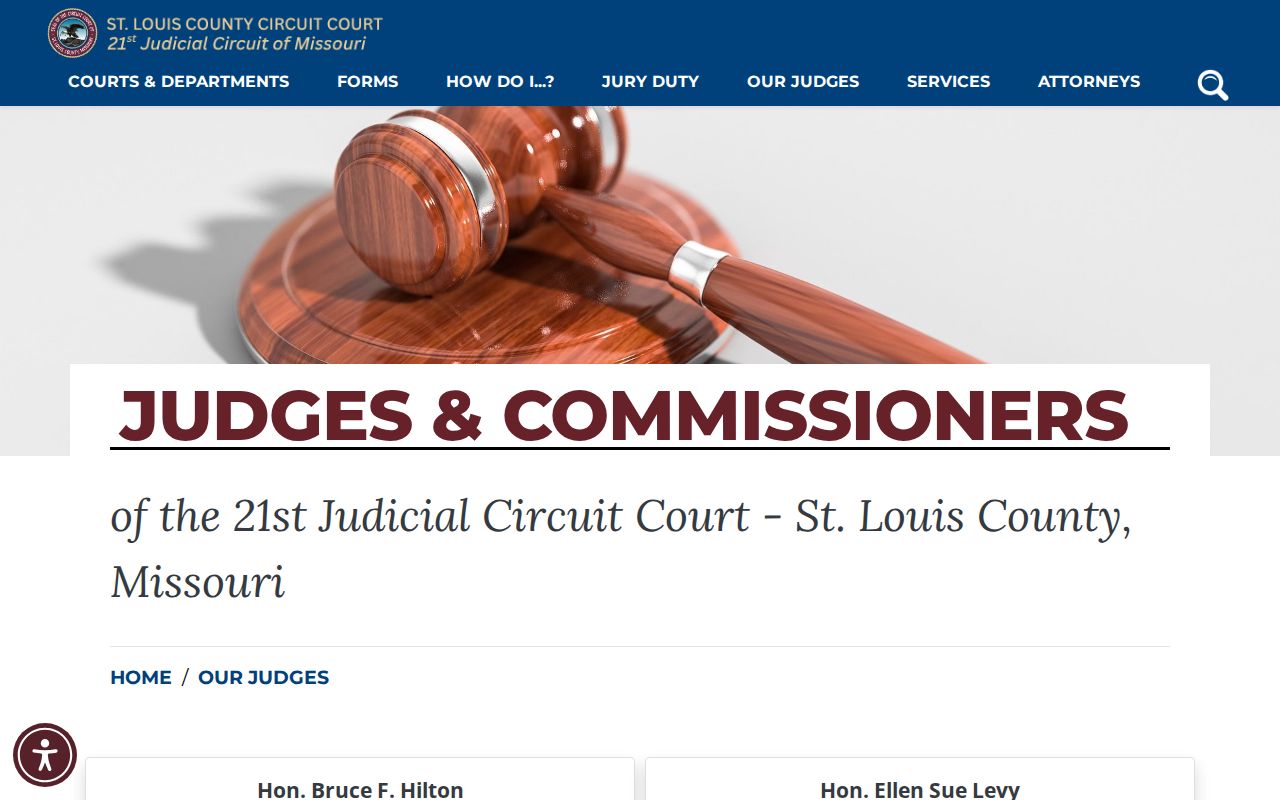
Treat the directory as a current assignment reference only. For the actual setting method and courtroom details, rely on the case notice and docket entry.
Inside a St. Louis County Criminal Docket
A public case view opens with the Case Header. It lists the case number, style, court or location, filing date, category, party roles, and any visible division context. Docket Entries come next, recording date-stamped filings, orders, hearing events, and outcomes. Some entries link to a document. Others are text-only. No link does not mean nothing happened; the attachment may be missing from the public view or secured.
Read the header and entries like an audit trail. The party panel, attorney panel, hearing details, and any disposition field each reveal a different slice of the record. Protected people, victims, witnesses, children, and some protection-order subjects may not show up in a public name search. Use a known case number with care. Do not infer identities or missing facts from the search screen.
| Case number | Missouri uses legacy category conventions such as CR; newer formats add location, category, sequence, and subcase information. |
|---|---|
| Case Header | Confirms the case style, filing date, court location, parties, and visible division before an entry is interpreted. |
| Docket entry | Shows the dated procedural event, its description, and a document hyperlink when the item is public and accessible. |
| Setting | May identify a pretrial, bond review, trial, or other scheduled event with date, time, and division context. |
| Disposition | Can record a plea, dismissal, sentence, order, or appeal-related action. It must be read at the count or event level. |
St. Louis County Criminal Docket Event Terms
The county's criminal and traffic docket-memo forms sort events into bond and release review, pretrial, trial, warrant work, failure to appear, and bond forfeiture. The local vocabulary matters. These words describe procedural events, not interchangeable outcomes. A continued setting just moves a date. A vacated setting cancels or sets one aside. Neither term means a charge was resolved.
The forms are blank administrative tools, not criminal case records. Still, they preview the event labels a division may use. The Civil/Criminal Docket Memo also tracks appearances, whether a pretrial was held, a definite trial date, settlement status, and trial length. Its notice language warns that a copy of an order can be the only notice, so keep the formal notice alongside the Case.net result.
- FTA
- Failure to appear. The local memo lists it as a docket action and may pair it with warrant or bond-forfeiture fields.
- Bond review
- A setting concerning release or bond conditions, not a final ruling on the charge.
- Warrant recall or request
- A procedural request or event that should be read with the related order and the current case status.
- ECASE
- A File Viewer label meaning the file is entirely electronic, not that every document is publicly downloadable.
How a Criminal Case Moves
A St. Louis County criminal docket often starts with a charging or initial-pleading entry. From there it may show arraignment or first appearance. Bond activity, pretrial work, and motions may follow. Trial settings, a plea or trial result, sentencing, and post-judgment events can appear too. Read the docket as a sequence. An amended charge is not the original charge. A notice of appeal is not the judgment that led to it.
Docket flow: Charge Filed › Arraignment › Pretrial Settings › Plea or Trial › Disposition › Sentencing or Appeal
An offense label stays an allegation until the court records a disposition. The same caution applies to warrant and FTA entries. Those are procedural events, not findings of guilt. Read the entry text, its date, and any related order together, and a partial record will not turn into a conclusion.
St. Louis County Criminal and Municipal Dockets
State charges and state traffic tickets in St. Louis County go through the 21st Judicial Circuit. Its criminal and associate criminal or traffic divisions handle them. City ordinance violations are different. Those stay with the municipal divisions, which run their own sessions and payment rules. Everything sits inside Missouri's court system. Even so, the local clerk, where you show up for court, and how you pay a fine can vary from one division to the next. The county's Municipal Division directory lists the participating local courts. It is the best first stop.
Citations add another wrinkle. A nine-digit uniform citation number can serve as the file number. It covers minor traffic, civil-infraction, watercraft, or conservation matters. But a city parking payment, a municipal case, and a state traffic case are not the same record. All three simply started with a citation. Check the division before you act on any docket entry.
One county form helps decode municipal language. The municipal certified-case memorandum uses familiar terms. These include continuance, plea or disposition, sentencing, trial de novo, remand, FTA, dismissal, warrant, and bond. So municipal cases speak much of the same procedural vocabulary as state cases. They still need the city court's own clerk and session details, though. For any question about a municipal setting, pair the county directory with the city court's own page.
Courts That Hold Criminal Dockets
The Circuit Court of St. Louis County, 21st Judicial Circuit, is Missouri's county trial court. Its Circuit Clerk holds the files and docket entries. Coverage spans circuit, associate criminal, traffic, family, juvenile, probate, and other circuit divisions. State criminal cases take a different route from municipal ones. They move through the circuit criminal and associate criminal or traffic divisions. Municipal matters sit with the local municipal clerks and court administrators instead.
Need a missing state case document, a certified judgment, or an offsite file? Contact the Office of the Circuit Clerk first. Skip the statewide technology office. For criminal and traffic lost-ticket help, the clerk's public numbers are 314-615-4773 or 314-615-2649. The statewide Case.net and JIS infrastructure provides the search layer. The county clerk remains the substantive file custodian.
The county clerk page names Joan M. Gilmer. She serves as Clerk of the Circuit Court. Her office can point you to the right county division. Municipal division clerks handle local municipal files. Appeals from circuit judgments travel through the Circuit Clerk. Their destination is the Missouri Court of Appeals, Eastern District. That makes an appeal entry a separate stage from the underlying circuit disposition.
St. Louis County Criminal Docket Confidentiality
Specialty programs can make a public docket look thinner than a normal criminal timeline. The county's DWI Treatment Court page states that its separate electronic file is confidential and closed. You may spot the public-facing program, but that does not mean its records, notes, or every related event are open to you.
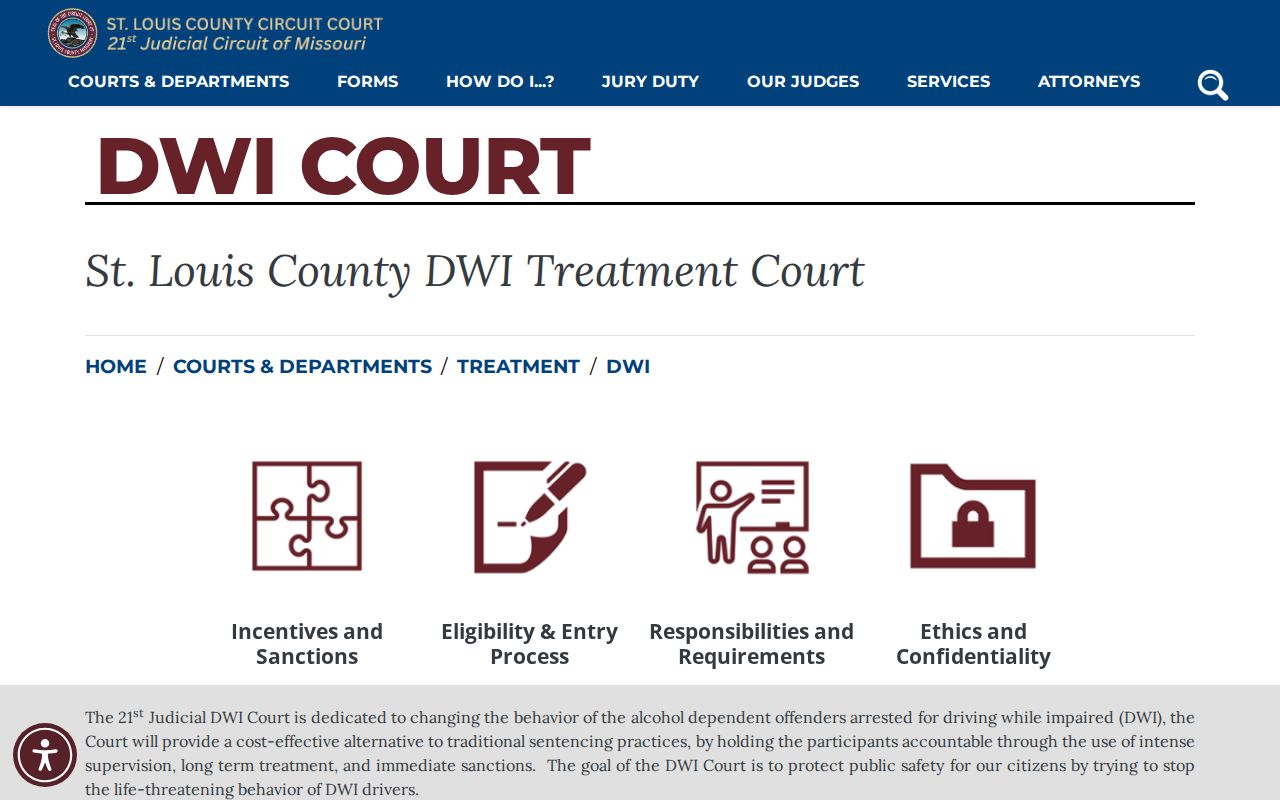
The treatment-court example shows the local access line clearly. A visible underlying case does not automatically open specialty material that is maintained separately.
Sealed Dockets and Public Access
Missouri Operating Rule 4 sets up statewide automated record keeping and public equipment. But confidential cases, confidential indexes, and confidential docket sheets are different. They stay closed to unauthorized users. Public case-level metadata can sit right alongside a secured document, a redacted filing, or a record reachable only at a courthouse terminal. A no-result search can mean several things. It might reflect a wrong identifier, a protected identity, or a restricted case.
Juvenile, mental-health, sealed, expunged, and certain specialty-program material each carry their own access boundaries. Be careful with motions, too. A docket entry reading "motion to seal" is just a request. It is not proof that an order has closed anything. Look for the resulting order, or ask the clerk what non-confidential docket metadata remains available. A Sunshine-law request cannot override the court rules or statutes that close an adjudicative record.
Access rules:
Missouri Revised Statutes § 610.120 controls public access to closed records and limits release to authorized users as the statute provides.
Missouri Revised Statutes § 610.140 provides for expungement procedure and post-order confidentiality.
Missouri Revised Statutes § 43.503 sets conditions for closure of juvenile records.
St. Louis County Criminal Document Access
The county's DWI Treatment Court eligibility material shows how a public program description and a case file differ. The two are separate sources. For a normal criminal case, start with the public index. Note the exact entry and its date. Then ask the Circuit Clerk which option fits your need: a public terminal, an ordinary copy, a certified copy, or an authenticated copy. The clerk will want a case number if you have one. Also give party names and roles, the copy type, and the document or date sought. Offsite cases take at least three working days.
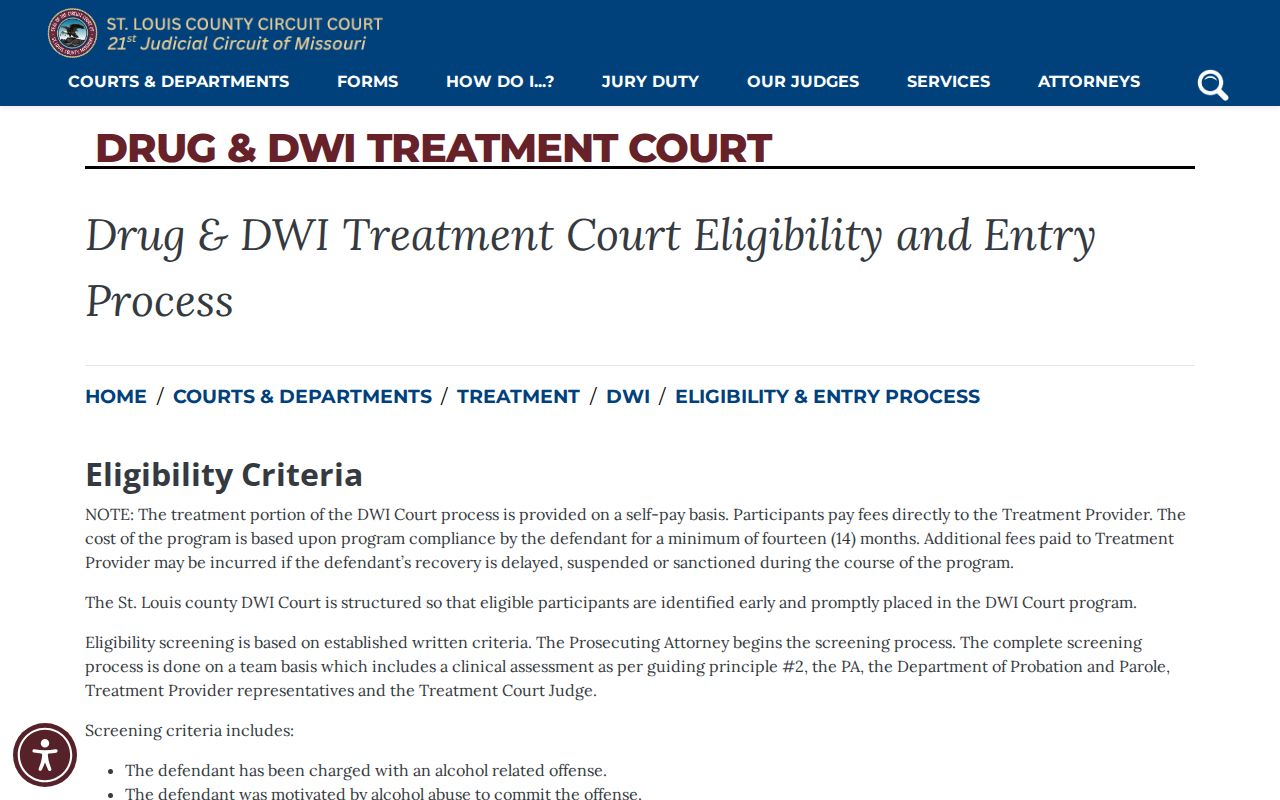
The same discipline works for every criminal file. Pin down the public docket event first. Then let the clerk explain what form of access exists, rather than guessing from a missing attachment.