
Getting St. Louis County Court Records
Missouri Case.net is the first stop. Use it when you know a case number, a party name, a filing date, or a hearing date. This statewide public index shows case headers, docket entries that are visible, and scheduled hearings. It will usually tell you which circuit division or municipal court holds the matter. Just remember that a public entry does not promise every document opens in your browser. Before asking anyone for a copy, write down the case number. Add the case style, document title, and entry date too.
There are in-person routes too. Ask at the local courthouse for a public-access terminal to view available electronic files. You can also call the Circuit Clerk for routing help. Another option is visiting the counter with paper-file or certification questions. A focused copy request by mail works as well. The county's St. Ann satellite offers public computer kiosks tied to the main courthouse. Municipal cases may sit with the municipal clerk or court administrator instead. The clerk can always tell you which office keeps a particular file.
- Write down the case number if it is known. Otherwise, note the party name, court location, and a narrow filing or judgment date.
- Search Case.net for the public case header, docket entries, and available hearing details.
- Identify the requested item: docket sheet, order, judgment, pleading, will, or another dated filing.
- Use a courthouse terminal, the Circuit Clerk counter, the appropriate municipal office, or the clerk’s phone and mail-request route when the online result is not enough.
- State whether an ordinary, certified, or authenticated copy is needed and ask whether the file is paper, offsite, scanned, or restricted.
Note: A calendar notice can confirm a setting. It is not the full case file or a certified court record.
St. Louis County Court Record Requests
What does the Circuit Clerk want in a certified-copy request? A case number if you have one helps. So do party names and roles, the kind of copy, whether you want the complete file or one document, and a rough filing, judgment, or dissolution date. Those details keep your request tied to one court file. They avoid a broad sweep for personal information. Payment comes due before release. An offsite file may take longer.
The clerk matters. That office runs the files for circuit civil, criminal, traffic, family, juvenile, probate, and specialty cases. Case.net and the statewide Judicial Information System help you find public index information. They cannot hand you a paper document, a certified judgment, a missing attachment, or a division-specific answer. For those, ask the clerk. The clerk's official copy-request instructions lay out exactly what details get a request routed to the right court file.
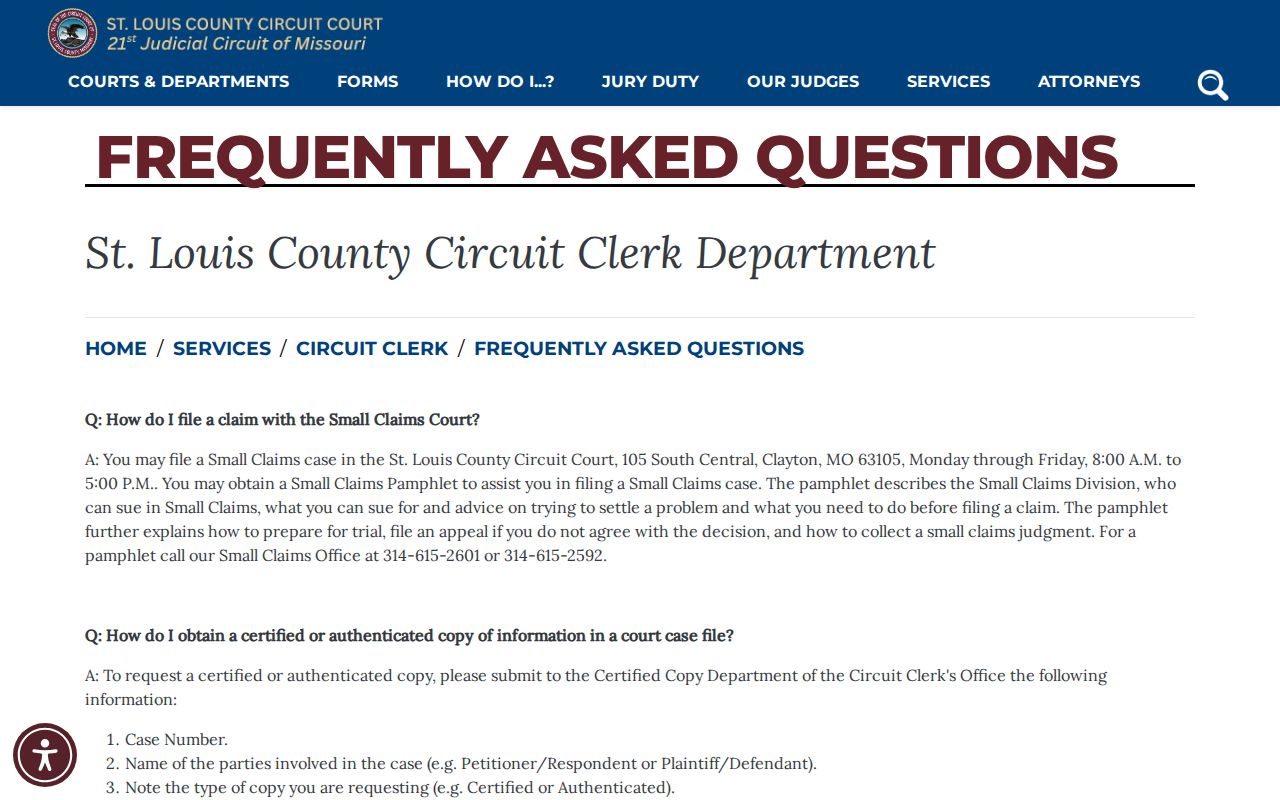
Those fields do real work. They let records staff tell a request for a docket entry apart from a request for the document behind it.
Office of the Circuit Clerk
St. Louis County Courts Building
105 South Central Avenue
Clayton, MO 63105
General office: 314-615-8029
Certified copies: 314-615-8015
Court Record Types
A St. Louis County court record search can turn up a case register, a filing, or a final court action. Think of the docket as the running list of procedural events. The file is the stack of materials that created those events: pleadings, service returns, motions, notices, orders, exhibits, and judgments. Divisions also hold distinct record groups, such as wills and probate materials, though access depends on the record's status and the rules for that division.
Always ask for the narrowest useful item. A dated judgment or a single docket entry is easier to pin down than every document tied to a name. For a municipal matter, the city division may keep its own case file and give you local session or payment instructions, even while Case.net supplies the statewide index.
- Docket sheets and date-stamped docket entries
- Pleadings, answers, motions, and responses
- Summonses, notices, and returns of service
- Orders, judgments, decrees, and dispositions
- Probate records, including wills, subject to the clerk’s copy process
- Post-judgment filings such as garnishment, satisfaction, or appeal material
St. Louis County Court Record File Viewer
Missouri File Viewer Help draws the line between a docket entry and its attached document. A hyperlink may open a document if you have permission. A text-only entry can mean no attachment exists. Or it can mean the attachment is not available to you. The viewer may show the case number and style, a document-category pane, preview or print controls, and an ECASE marker for a wholly electronic file.
ECASE does not mean open remote access. State eFiling guidance says public users may view public electronic documents at a courthouse terminal when staff provide access. A secured document, a confidential case, a newly processed filing, or a paper-only record calls for a clerk question. Skip more online searching in those cases. Carry the document title and docket date to the counter.
Note: A missing document link does not prove the filing, hearing, or order never happened.
Inside a St. Louis County Court Record
Case.net's public view and the court file answer different questions. The header identifies the case. The docket sheet logs what happened over time. The file may hold the underlying public documents. The fields here follow the official Case.net and File Viewer descriptions, and a field can be missing because of the case type or access setting, not because a court event is impossible.
| Case Header | Case number, style, filing date, court or location, category, and any visible division context. |
|---|---|
| Case Number | A local identifier; traffic and civil infractions may use a nine-digit uniform citation number. |
| Docket Entries | Date-stamped filings, orders, service events, hearings, settings, and procedural actions. |
| Documents | Publicly available linked filings, organized by category where the file viewer permits access. |
| Hearing Data | Event type, date, time, division, location or remote method, and visible status. |
| Disposition | A judgment, dismissal, plea, sentence, order, satisfaction, or appeal-related entry when shown. |
A docket entry marked as a judgment is not the same thing as a certified copy. Certification from the clerk is a separate service in St. Louis County.
St. Louis County Court Record Timing
Stored files take longer. The Circuit Clerk tells requesters that offsite cases need at least three working days. Plan around that window. Treat it as a retrieval estimate only. It does not promise that every item is public or ready to hand over. Before you drive to the courthouse, ask where the file sits: at the building, archived offsite, scanned, still processing, or held by a different division. A file that has not come back from storage can turn a trip into a wasted hour.
Wills run through their own lane. The clerk charges $1 per page for will copies and allows 48 hours. It asks you to call the wills or certified-copy department first. Municipal case files and circuit-level files can likewise follow different office routes in St. Louis County. One quick status call by phone can save you a full trip.
Note: The county’s web contact form cannot file a pleading. It cannot contact a judge or replace a record request routed the proper way.
Fees and Certified Copies
Know which copy you need. An ordinary copy just gives you the text of a public item. A certified copy carries the clerk’s certification. That is the right ask when a court, agency, or filing process demands official proof. Authentication may add yet another step. The county’s 2026 Schedule of Deposit and Fees splits copying, certification, authentication, filing deposits, and service charges into separate lines. Never lump them into one fee.
| Copy service | Listed amount | Record-request note |
|---|---|---|
| Certified copy, first page and seal | $1.50 | Ask the clerk whether the requested item needs certification. |
| Each additional certified-copy page | $0.30 | Page count affects the final charge. |
| Will copy | $1.00 per page | The clerk allows 48 hours and directs callers to the wills or certified-copy department. |
| Authentication | Varies by listed component | Ask before ordering a plain copy for an official use. |
Pay before release. The fee schedule sets no general remote per-document viewing fee for the public index, and paying a copy charge never overrides a record restriction.
St. Louis County Court Record Access Rules
Access starts with the rules. Do not assume every government document is open. Missouri Operating Rule 4 builds a uniform automated record system with searchable public indexes. Confidential cases, along with their indexes, stay closed to unauthorized users. Missouri's open-records statutes cover government records and administrative functions. Yet they cannot unlock a sealed adjudicative file through a general request.
Two statutes do most of the work. Missouri Revised Statutes §610.010 defines public-record terms and the judicial administrative context. Its companion §610.023 sets inspection, copying, and response rules for covered governmental records. When you request a court file, the clerk and the court rules still control the security status of the case document. The official inspection and copying statute lays out that public-record framework in full.
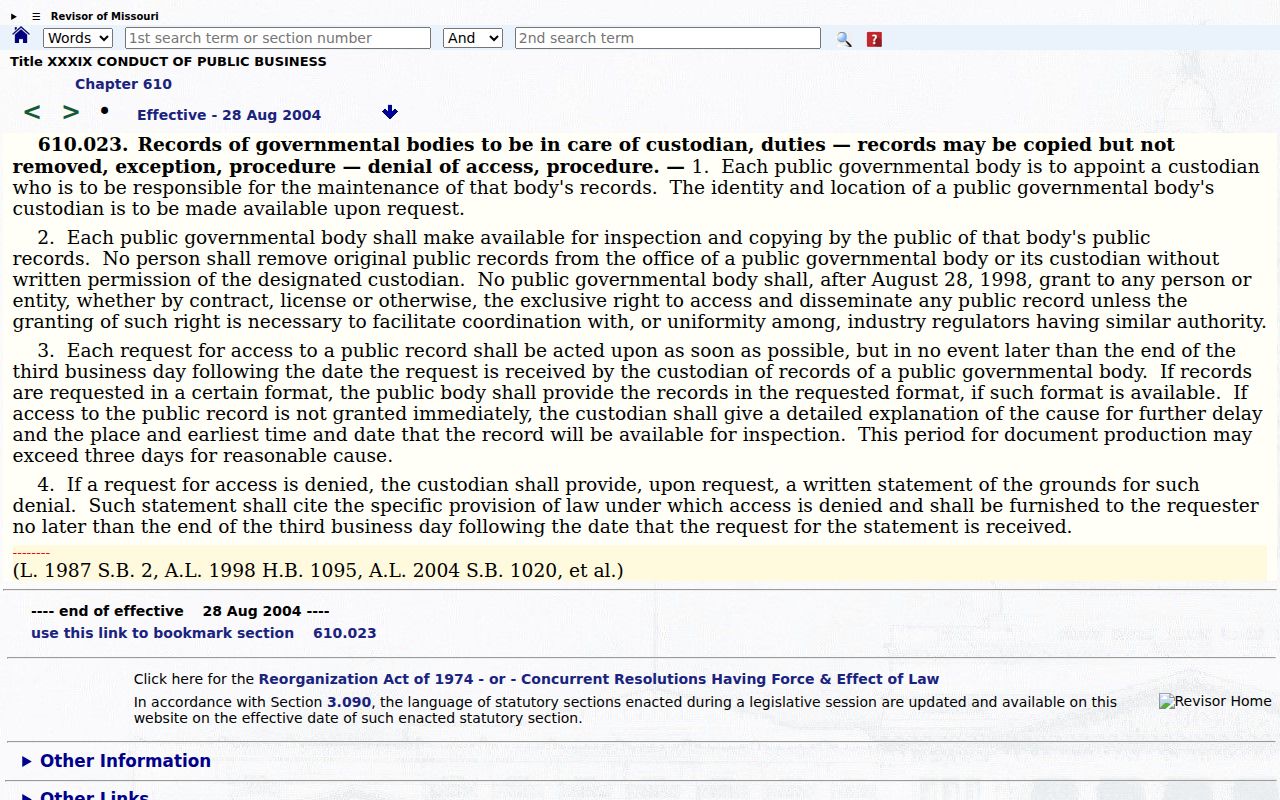
None of that replaces the clerk’s job of applying court-specific confidentiality rules to your requested case file. Missouri’s public-record definitions supply the surrounding statutory context.
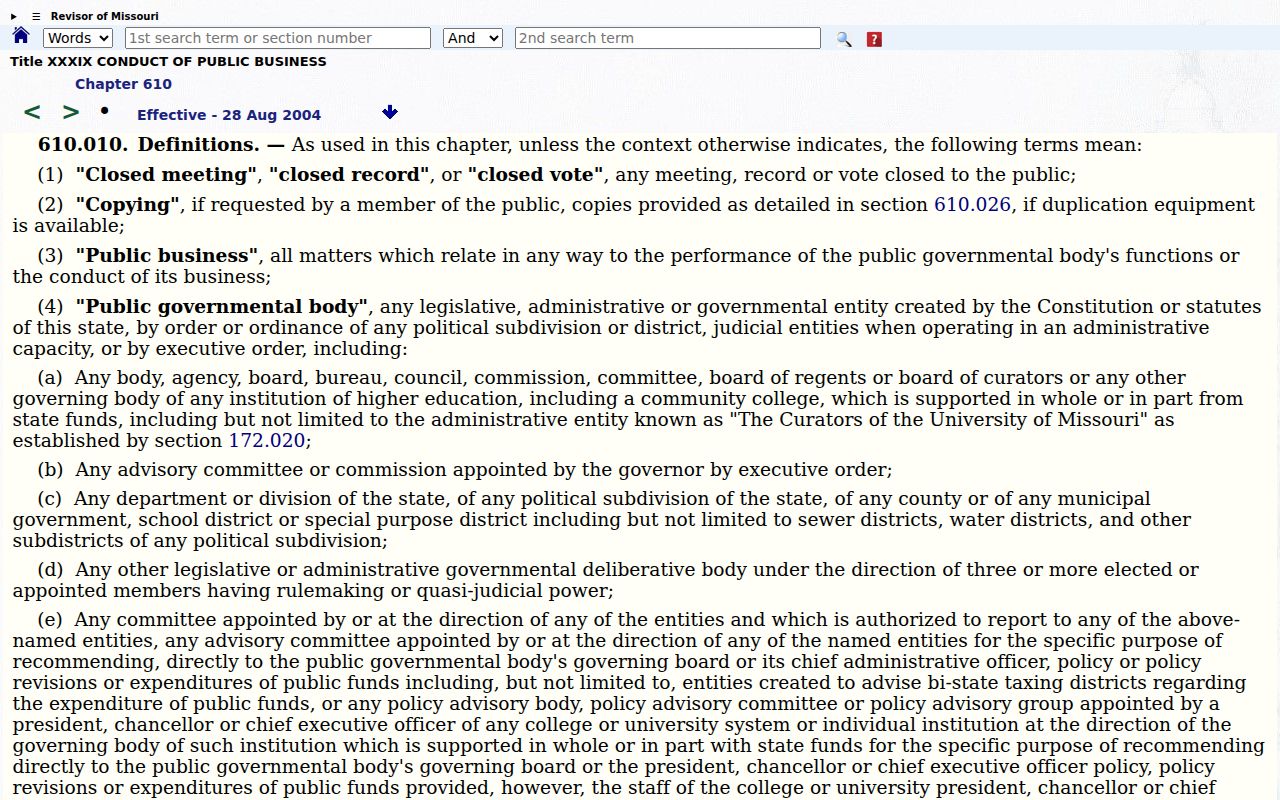
Ask by case number and document. A precise request keeps a court case file from getting tangled up with a general administrative-record inquiry.
Sealed Records and Public Access
A public case header is not always a public document. Missouri's File Viewer rules draw a line between public material and confidential or secured records. A sealed filing, a closed matter, or a protected name can hide results from a name search. It can block a docket link from opening. It can also limit what the clerk may hand you. When an item will not come through, ask a simple question. Does a public docket entry, a redacted version, or a certified public copy exist? Never ask staff to bypass an access control.
Missouri record-access boundaries:
Operating Rule 4 supports public automated indexes but excludes confidential cases and docket sheets from unauthorized public access.
§610.120 addresses closed records and limits public access as the statute provides.
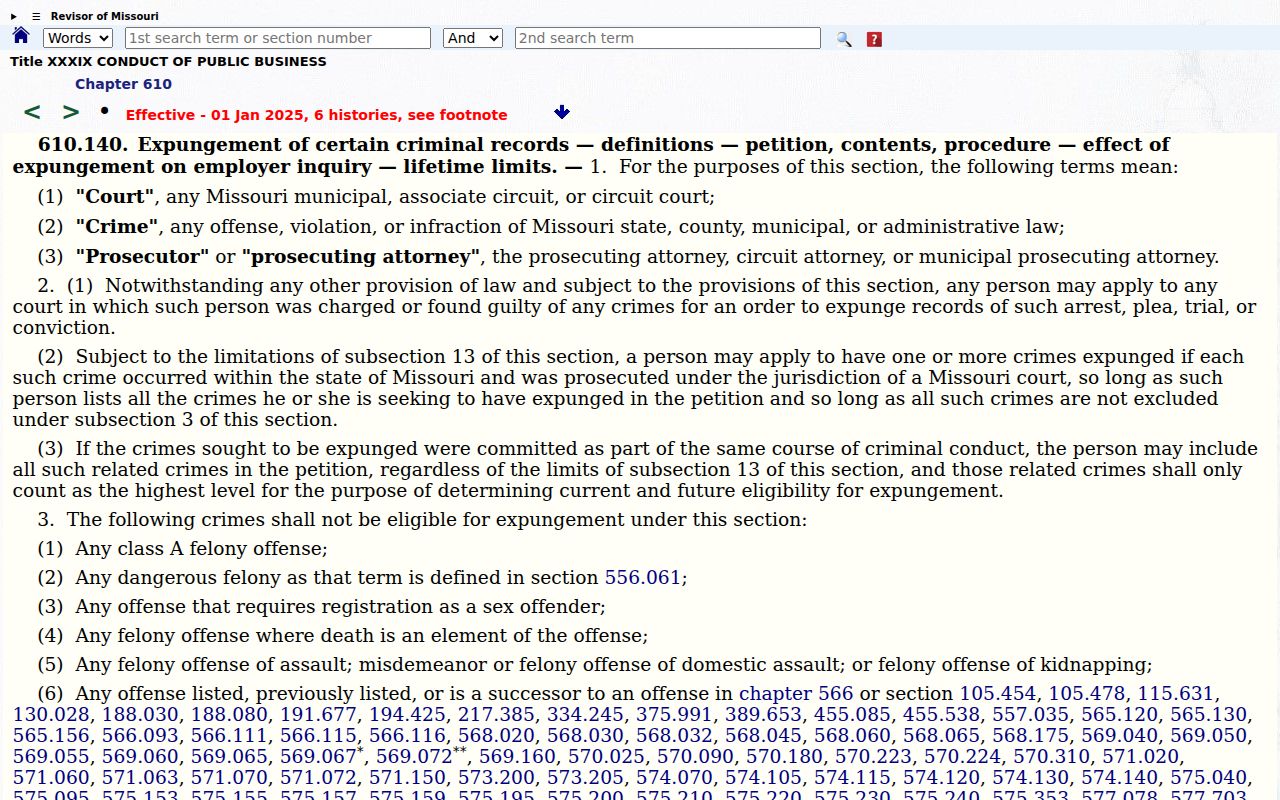
§610.140 governs expungement proceedings and post-order confidentiality.
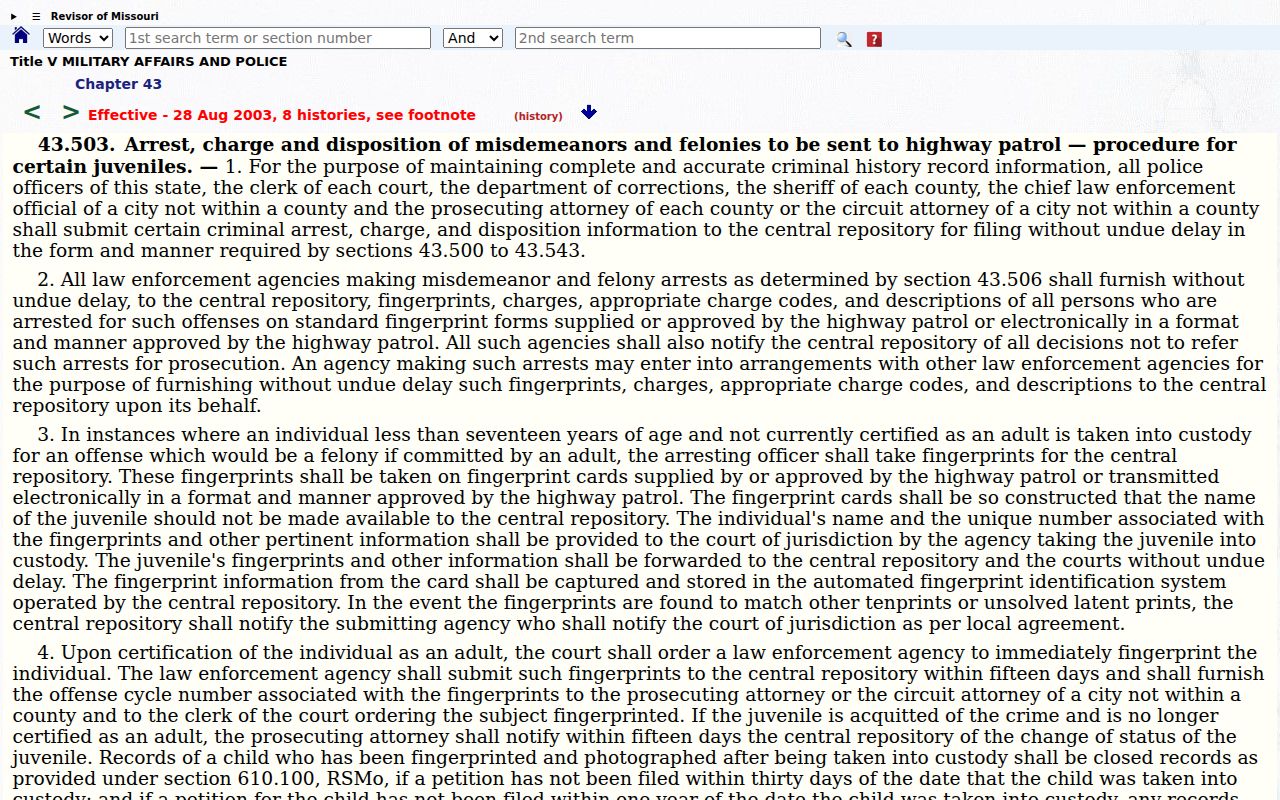
§43.503 identifies statutory conditions for closure of juvenile records.
The official closed-records statute is one source for the access boundary.
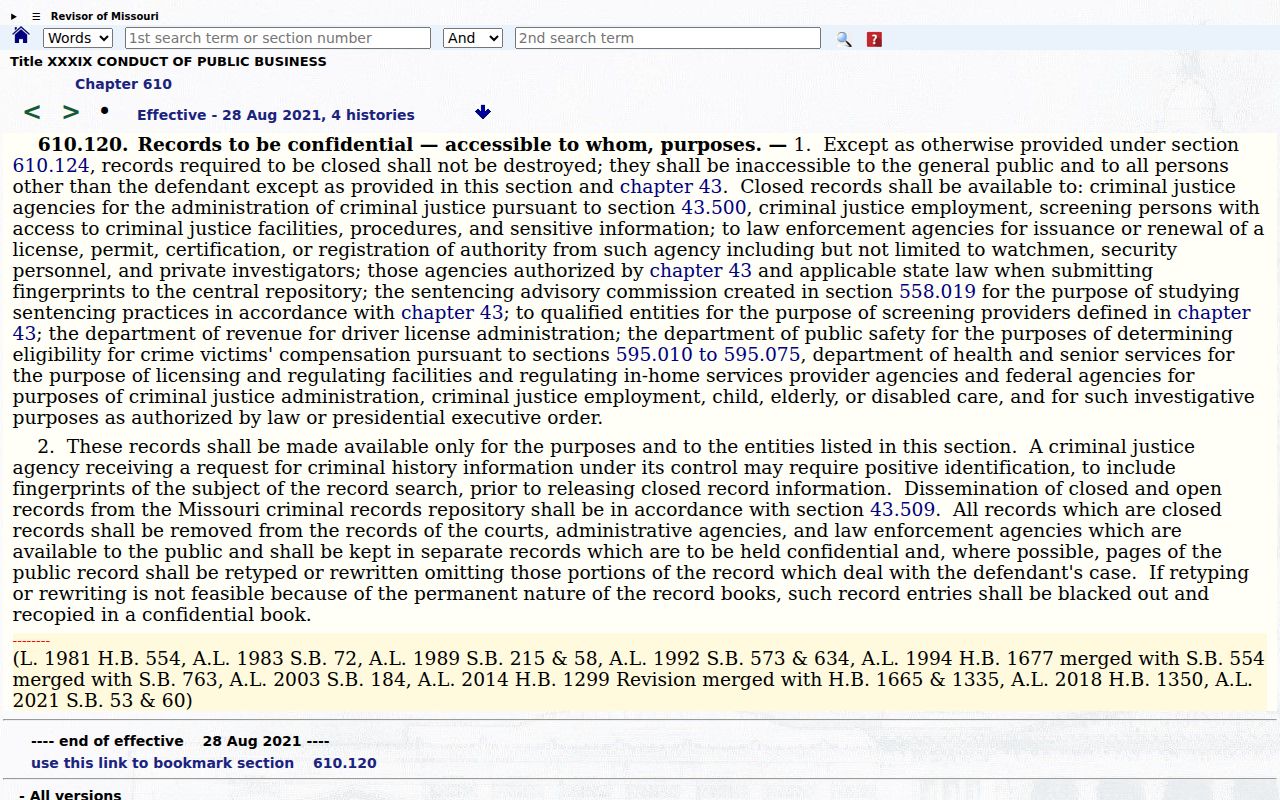
The practical effect matters. A denial may simply reflect a lawful closure rather than an incomplete clerk search.
St. Louis County Court Record Red Flags
Some materials demand extra care. Juvenile, mental-health, expunged, sealed, and certain specialty-program records all sit near the line. The county itself describes a DWI Treatment Court electronic file as confidential. Watch the docket language too. An entry saying a motion to seal was filed proves nothing about the outcome. Read the later order and the current access status instead. Never infer a protected person's identity. A related adult result or a partial case header will not support that guess. Missouri's juvenile-record closure provision spells out when juvenile records can be closed.
Stop at the public boundary. A court record search should end there, with the clerk asked whether any non-confidential material can be released. Missouri’s expungement statute describes the court process and the confidentiality that follows it.
For a case that is open, a St. Louis County case lookup can supply the number and date you need before you make a focused clerk request.